HEMI Rod Knock: Symptoms, Causes, and Engine Rebuild Options
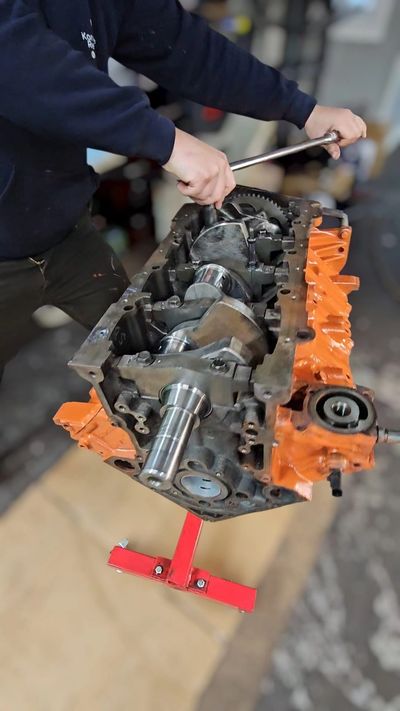
HEMI Rod Knock: Symptoms, Causes, and Engine Rebuild Options
A deep knocking noise from a 5.7L or 6.4L HEMI engine may indicate connecting rod bearing damage—one of the most serious internal engine problems a vehicle owner can experience.
Unlike a light valvetrain tick or an exhaust manifold leak, rod knock usually produces a deeper metallic sound that follows engine speed and may become louder during acceleration or when the engine is under load.
Rod knock occurs when excessive clearance develops between a connecting rod bearing and the crankshaft journal. Instead of maintaining a controlled film of pressurized oil between the components, the damaged bearing allows metal surfaces to move or strike against each other.
Once this condition develops, continuing to drive can damage the crankshaft, connecting rods, oil pump, cylinder walls, and other internal engine components. In severe cases, a connecting rod may fail completely and damage the engine block.
At Korean Engine Rebuild, we diagnose, repair, machine, and rebuild HEMI engines for Dodge, Ram, Chrysler, and Jeep vehicles. Our team carefully evaluates the condition of the engine before recommending repair, rebuilding, or replacement.
What Does HEMI Rod Knock Sound Like?
Rod knock is commonly described as a deep, repetitive metallic knocking or hammering sound coming from the lower portion of the engine.
The sound may:
- Become faster as engine RPM increases
- Grow louder during acceleration
- Be more noticeable when the engine is under load
- Continue after the engine reaches operating temperature
- Sound deeper than a lifter or injector tick
- Be accompanied by low oil pressure
- Become progressively worse over time
In some cases, the noise may be less noticeable at idle and become much louder when the driver presses the accelerator.
However, sound alone is not enough to confirm rod bearing failure. Piston slap, valvetrain problems, flexplate damage, exhaust leaks, accessory components, and other mechanical conditions can create noises that may be confused with rod knock.
A professional inspection is necessary to identify the actual source.
What Causes Rod Knock in a HEMI Engine?
Connecting Rod Bearing Wear
The connecting rod bearings create a smooth, lubricated surface between the connecting rods and the crankshaft journals.
When these bearings become worn, damaged, or deformed, excessive clearance develops. The oil film can no longer keep the components properly separated, allowing the connecting rod assembly to move abnormally against the crankshaft.
As bearing clearance increases, the knocking sound typically becomes more pronounced.
Low Engine Oil Level
Operating a HEMI engine with insufficient oil can reduce lubrication to the crankshaft and connecting rod bearings.
Even a temporary loss of lubrication may generate excessive heat and friction. If the vehicle continues to operate with low oil, the bearing material may wear away or transfer onto the crankshaft journal.
Drivers should never ignore a low oil warning, unusual engine noise, or repeated need to add oil.
Low Oil Pressure
Correct oil pressure is essential for protecting the crankshaft bearings, connecting rod bearings, camshaft, lifters, and other moving components.
Low oil pressure may result from:
- A worn or damaged oil pump
- Excessive internal bearing clearance
- Low engine oil level
- Oil pickup tube problems
- Restricted oil passages
- A clogged or incorrect oil filter
- Oil contamination
- Incorrect oil viscosity
- Severe internal engine wear
When oil pressure becomes too low, the protective oil film between the crankshaft and bearings may break down.
Contaminated or Degraded Engine Oil
Dirty, diluted, overheated, or contaminated oil cannot protect internal engine components as effectively as clean oil of the correct specification.
Metal particles, sludge, fuel dilution, coolant contamination, and excessive carbon buildup may reduce lubrication and accelerate bearing damage.
Extended oil-change intervals may also allow the oil to lose some of its protective properties.
Oil Starvation
Oil starvation can happen even when oil is present in the engine.
Problems involving the oil pickup tube, oil pan, pump, filter, internal passages, or excessive bearing clearance may prevent adequate lubrication from reaching critical components.
During oil starvation, bearing surfaces can overheat quickly and suffer permanent damage.
Engine Overheating
Severe overheating can reduce oil viscosity, damage bearing surfaces, distort internal components, and weaken the engine’s ability to maintain correct operating clearances.
An engine that has experienced a major overheating event should be inspected for more than cylinder head or head gasket damage. The crankshaft bearings, connecting rods, pistons, and cylinder walls may also have been affected.
Previous Internal Engine Damage
Metal contamination from a damaged camshaft, failed lifter, worn bearing, or other internal component can circulate through the lubrication system.
These particles may damage additional bearings and crankshaft journals, turning an isolated failure into a more extensive engine problem.
For this reason, replacing only the first visibly damaged component is not always enough.
HEMI Rod Knock vs. HEMI Tick
A HEMI tick and rod knock are not the same condition.
A tick is usually a lighter, sharper, and faster clicking sound. It may come from:
- Fuel injectors
- Exhaust manifold leaks
- Broken exhaust manifold bolts
- Hydraulic lifters
- Camshaft damage
- Low oil pressure in the valvetrain
Rod knock generally sounds deeper and heavier. It usually comes from the lower portion of the engine and may become louder when the engine is placed under load.
Other internal noises may include:
- Piston slap: Often more noticeable when the engine is cold
- Main bearing knock: May produce a deeper, heavier sound
- Wrist pin noise: Often a lighter double-knock
- Flexplate noise: May appear near the rear of the engine
- Accessory noise: May come from pulleys, tensioners, or driven components
Because these noises can be difficult to distinguish, replacing parts based only on an audio recording or a brief inspection may lead to an incorrect diagnosis.
Common Symptoms of HEMI Rod Bearing Damage
Rod knock may be accompanied by other signs of internal engine damage, including:
- Deep metallic knocking
- Low oil pressure warning
- Reduced engine performance
- Engine vibration
- Metal particles in the engine oil
- Metallic debris inside the oil filter
- Increasing oil consumption
- Rough operation
- Check engine light
- Engine overheating
- Damaged crankshaft journals
- Complete engine seizure
Not every engine will display all these symptoms. Some HEMI engines may continue running despite significant bearing damage.
The fact that an engine still starts and drives does not mean it is safe to continue operating.
Can You Drive With HEMI Rod Knock?
Driving with suspected rod knock is not recommended.
Once a connecting rod bearing has developed excessive clearance, every additional minute of engine operation may cause more damage. A bearing that may initially have affected one crankshaft journal can deteriorate further and contaminate the entire lubrication system.
Continued driving may lead to:
- Severe crankshaft damage
- Connecting rod failure
- Oil pump damage
- Additional bearing failure
- Cylinder wall damage
- Piston damage
- Engine block damage
- Sudden engine seizure
- Complete loss of the engine
If the engine develops a deep metallic knock, low oil pressure, or metal contamination, the safest approach is to stop operating the vehicle and arrange for professional inspection or towing.
How HEMI Rod Knock Is Diagnosed
A complete diagnosis should determine both the source of the sound and the extent of the internal damage.
Our evaluation process may include:
- Listening to the engine at idle and controlled RPM levels
- Identifying whether the sound comes from the upper or lower engine
- Scanning the vehicle for diagnostic trouble codes
- Checking engine oil level and condition
- Measuring actual engine oil pressure
- Inspecting for external oil leaks
- Examining the oil for metallic material
- Cutting open the oil filter to check for bearing debris
- Inspecting the oil pan and pickup system
- Evaluating cylinder performance
- Inspecting connecting rod bearings and crankshaft journals
- Measuring internal engine components after disassembly
Bearing material in the oil or filter is an important warning sign, but the engine may need to be disassembled before the full extent of the damage can be confirmed.
Can HEMI Rod Knock Be Repaired?
Repair options depend on how early the problem is discovered and how much internal damage has occurred.
In limited situations, bearing damage may be addressed before the crankshaft, connecting rods, cylinders, and lubrication system suffer extensive damage. However, installing new bearings without inspecting and measuring the crankshaft is not a dependable solution.
A damaged crankshaft journal may be:
- Scratched
- Scored
- Out of round
- Tapered
- Overheated
- Covered with transferred bearing material
- Outside the manufacturer’s allowable clearances
Installing new bearings against a damaged or incorrectly sized journal can cause rapid repeat failure.
The engine should be disassembled and measured before determining whether the crankshaft can be polished, professionally machined, or must be replaced.
When Is a Complete HEMI Engine Rebuild Recommended?
A complete HEMI engine rebuild may be the most reliable repair when inspection reveals:
- One or more damaged connecting rod bearings
- Crankshaft journal damage
- Metal contamination throughout the engine
- Low oil pressure caused by excessive bearing clearance
- Main bearing damage
- Damaged connecting rods
- Cylinder wall wear or scoring
- Piston damage
- Camshaft or lifter damage
- Excessive oil consumption
- Previous severe overheating
- Multiple internal engine problems
During a professional engine rebuild, the engine is completely disassembled so every major component can be cleaned, inspected, and accurately measured.
Depending on the condition of the engine, the rebuilding process may include:
- Complete engine disassembly
- Professional cleaning
- Crankshaft inspection and measurement
- Connecting rod inspection
- Main and rod bearing replacement
- Cylinder measurement and machining
- Piston and piston ring inspection
- Oil pump inspection or replacement
- Camshaft and lifter inspection
- Cylinder head reconditioning
- Replacement of required gaskets and seals
- Professional engine assembly
- Final quality-control inspection
A complete rebuild addresses the underlying damage rather than attempting to silence the noise temporarily.
Rebuild or Replace a HEMI Engine?
The decision to rebuild or replace the engine depends on the condition of the block, crankshaft, cylinder heads, internal components, vehicle mileage, and overall value of the vehicle.
A rebuild may be a good option when:
- The original engine block is reusable
- The internal damage can be corrected through professional machining
- The customer wants to retain the original engine
- The vehicle is in good overall condition
- A dependable long-term repair is the priority
Engine replacement may be considered when:
- The engine block is severely damaged
- A connecting rod has broken through the block
- Multiple major components are unusable
- The cost of rebuilding exceeds the cost of a dependable replacement
- The customer needs a different repair option based on budget or timing
At Korean Engine Rebuild, we evaluate each engine individually and explain the available options before work begins.
Professional HEMI Engine Rebuilding in New Jersey
At Korean Engine Rebuild, our team provides professional HEMI engine diagnosis, internal repair, precision machining, rebuilding, replacement, and installation services.
We work with HEMI engines found in Dodge, Ram, Chrysler, and Jeep vehicles and provide a complete solution for customers dealing with internal knocking, low oil pressure, bearing damage, camshaft failure, lifter failure, or complete engine failure.
Our services include:
- HEMI engine diagnosis
- Connecting rod bearing inspection
- Crankshaft inspection and machining
- Precision block machining
- Cylinder head reconditioning
- Complete HEMI engine rebuilding
- Engine replacement
- Professional engine installation
Our goal is to identify the actual cause of the failure and recommend the most practical long-term solution—not simply replace parts without understanding why the damage occurred.
Schedule a HEMI Engine Inspection
A deep knocking sound should never be ignored. Diagnosing the problem early may help prevent crankshaft, connecting rod, engine block, and cylinder damage.
Contact Korean Engine Rebuild for professional HEMI engine diagnosis, rebuilding, and replacement services.
Call or WhatsApp: 609-349-0974
Address: 1457 Princeton Ave, Ewing, NJ 08648